

Many patients dread root canals more than almost any other dental procedure. But most of that fear comes from not knowing what to expect. Understanding what you’ll actually feel during your root canal treatment in Airdrie can make a real difference. When you know what’s happening at each step, the experience becomes far less scary.
At Airdrie Springs Dental, Dr. Hubert Ng and our team walk every patient through the process before we begin. Education is one of our most powerful tools for reducing anxiety. This article breaks down the root canal procedure step by step — exactly as you would experience it in our chair.
What You’ll Actually Feel During Your Root Canal Treatment in Airdrie: Before We Begin
Before anything else happens, your dentist takes X-rays of the affected tooth. This part is completely painless. The X-rays help Dr. Ng see the shape of the root canals and check for infection in the surrounding bone.
Next comes the most important part of the whole procedure: local anesthesia. A small numbing gel is applied to your gum first. This softens the sensation of the injection that follows. Most patients describe the injection as a minor pinch or slight pressure — nothing more.
Within a few minutes, the entire area becomes fully numb. You will feel zero pain during the procedure itself. Many patients are surprised by how comfortable this stage actually is.
- A topical gel numbs your gum before any needle touches it
- The anesthetic injection feels like mild pressure, not sharp pain
- Full numbness sets in within two to three minutes
- You can signal your dentist at any time if you feel discomfort
Step by Step: What Happens Inside the Tooth
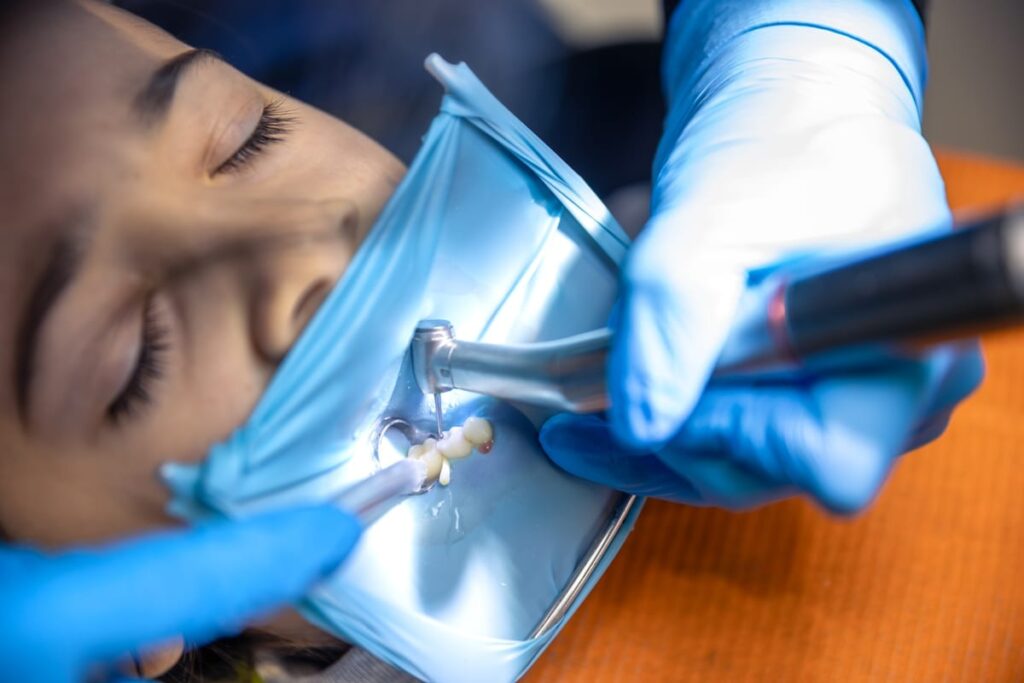
Once you are fully numb, Dr. Ng places a small rubber sheet called a dental dam around your tooth. This keeps the area clean and dry. It also protects you from accidentally swallowing any tiny instruments or solutions.
A small opening is made in the top of the tooth. Because you are numb, you will not feel this. You may hear a soft drilling sound, but that is completely normal. Think of it like hearing sounds around you while wearing earplugs.
The infected or damaged pulp is then carefully removed from inside the tooth. The canals are shaped and cleaned using very small files. You will feel pressure and movement during this stage — but not pain. That distinction matters enormously for anxious patients.
- A dental dam isolates the tooth and keeps it dry
- A small access hole is drilled through the top of the tooth
- Infected pulp tissue is removed using tiny, precise instruments
- Each canal is cleaned, shaped, and flushed with a disinfecting solution
- The entire cleaning process typically takes 30 to 60 minutes
Sealing and Filling: The Final Stages
Once the canals are clean, Dr. Ng fills them with a rubber-like material called gutta-percha. This material seals the canals permanently. It prevents bacteria from re-entering the cleaned space.
The access opening in your tooth is then sealed with a temporary or permanent filling. You will feel very little during this stage. The tooth is still numb, so placement of the filling material is comfortable.
In most cases, a dental crown is placed over the tooth at a follow-up appointment. The crown restores the tooth’s strength and function. Your General Dentistry team will plan this next step with you before you leave the clinic.
What You’ll Feel After the Procedure
Once the anesthetic wears off — usually within a few hours — some mild soreness is normal. The tissue around your tooth may feel tender for a day or two. This is simply your body responding to the cleaning process inside the tooth.
Over-the-counter pain relievers are usually enough to manage any post-treatment discomfort. Dr. Ng will give you specific aftercare instructions before you leave. Most patients return to normal daily activities the very next day.
Severe pain after a root canal is uncommon. If you experience sharp or worsening pain beyond the first couple of days, contact our office right away. It’s always better to check than to wait and worry.
How Sedation Can Make Your Experience Even More Comfortable
If you feel anxious about dental visits, sedation dentistry is a wonderful option. Dr. Ng offers sedation to help patients feel calm and relaxed throughout the procedure. You remain conscious and responsive, but deeply at ease.
Sedation is especially helpful for patients with a strong gag reflex or severe dental anxiety. It does not replace the local anesthetic — you are still fully numb. Sedation simply removes the emotional stress that often makes procedures feel worse than they are.
Our practice also provides Family Dentistry services, which means we create a comfortable, welcoming environment for patients of all ages. Whether it’s your first root canal or your fifth, we are here to support you every step of the way.
Frequently Asked Questions
Does a root canal hurt during the procedure?
No. The area is completely numbed with local anesthesia before the dentist begins. Most patients feel only mild pressure or vibration — not pain. The procedure is much more comfortable than most people expect.
How long does a root canal take in Airdrie?
Most root canals at Airdrie Springs Dental take between 60 and 90 minutes for a single visit. More complex cases may require a second appointment. Dr. Ng will give you a clear timeline after examining your tooth.
Is it normal to feel sore after a root canal?
Yes, mild tenderness around the treated tooth is very common for one to three days after the procedure. This is a normal healing response. Over-the-counter pain relievers typically manage this discomfort effectively.
What is the rubber sheet placed in my mouth during the procedure?
That is called a dental dam. It isolates the tooth being treated and keeps the area clean and dry. It also protects you from swallowing any instruments or rinsing solutions during the procedure.
Can I drive myself home after a root canal?
If you had local anesthesia only, you can usually drive yourself home without any issue. However, if you chose sedation dentistry, you will need a trusted adult to drive you home. Dr. Ng’s team will confirm this with you when you book your appointment.
Root canals have an undeserved reputation for being painful. The reality is that modern techniques and effective anesthesia make this a very manageable procedure. Understanding each step removes the fear that comes from the unknown. At Airdrie Springs Dental, Dr. Hubert Ng is committed to making your experience as calm and comfortable as possible. Book Now to schedule your appointment with our team.